
Asia has been unstable these past few weeks. But what truly deserves attention is not the daily rotating news headlines, but three events coming together: the collective devaluation of Asian currencies, Singapore's former Defense Minister issuing war warnings, and American think tanks urging Japan to reconcile with China. Each case alone has its own explanation. Looking at them together, the context becomes clear.
Let's look at the data first. The yen fell below 160, depreciating more than 13% in half a year and continuously hitting a nearly thirty-year low. According to data from the Bank for International Settlements, using 2020 as the baseline, the yen's real effective exchange rate index fell to 65.70 in April this year, the lowest level since Japan implemented the floating exchange rate system in 1973. The Bank of Japan intervened twice, injecting tens of billions of dollars, but the result was only a rebound and continued to decline.
The Korean won also suffered hard, falling below the 1540 mark, marking its lowest level since the 2009 financial crisis. The Indian rupee fell below 95, with the market widely expecting it to break 100 within the year. The rupiah was even worse, falling to a historic low, down 1.6% over the past month, ranking among the worst-performing emerging market currencies globally. The Thai baht, Philippine peso, and Malaysian ringgit also failed to hold up, all under pressure.
Market institutions are generally pessimistic about the outlook. The median forecast from about 40 institutions compiled by LSEG shows that by the end of 2026, the yen will only reach 154, and by mid-next year 150, meaning the yen will not be able to climb back from such a prolonged low. India's situation is even more dangerous, with the exchange rate, inflation, and stock market experiencing a "triple kill" situation, and even British media have started to follow the trend in pessimism about India's economy.
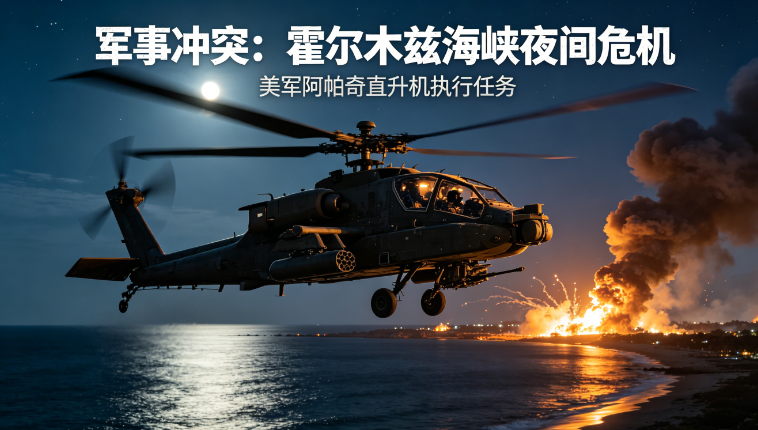
This round of declines is fundamentally different from the "tapering panic" of 2013 or the 1997 Asian financial crisis: now it is not a single external shock, but the simultaneous release of three heavy pressures: the energy account, the dollar cycle, and geopolitical conflicts. Japan, South Korea, India, and Vietnam generally rely on Middle Eastern oil at over 85%, and tensions in the Strait of Hormuz have pushed oil prices higher, directly draining liquidity from foreign exchange reserves. Many companies face a fourfold pressure: "rising oil prices, weak dollar, falling local currency, and financing difficulties." Meanwhile, the Federal Reserve has maintained a tough defensive stance in the face of inflation rebound risks brought by Middle East wars, showing no sign of backing down on high interest rates.
Central banks have done everything they should. Verbal intervention, direct use of foreign exchange reserves to provide a bottom line, tightening capital controls—the Bank of Japan was even forced to intervene in rare ways. But the results are obvious: the more they intervene, the more the price drops.
The only firm holding is the renminbi. In 2025, China's goods trade surplus will be 1.2 trillion USD; in the first two months of 2026, the foreign exchange settlement and sales balance will be 219.5 billion yuan, totaling 745.2 billion yuan over three months. Export companies no longer hold US dollars but convert them into RMB, reversing market expectations. Moreover, with the simultaneous operation of four major energy arteries—China-Russia natural gas, Central Asia pipeline, China-Myanmar oil and gas pipeline, and offshore LNG—the impact of Hormuz's fluctuations on China's energy security is far less than that of Japan, South Korea, and India. This is not luck; it is diluting risks and costs in advance.
The vast majority of Asian countries do not have this condition. They can only passively endure.
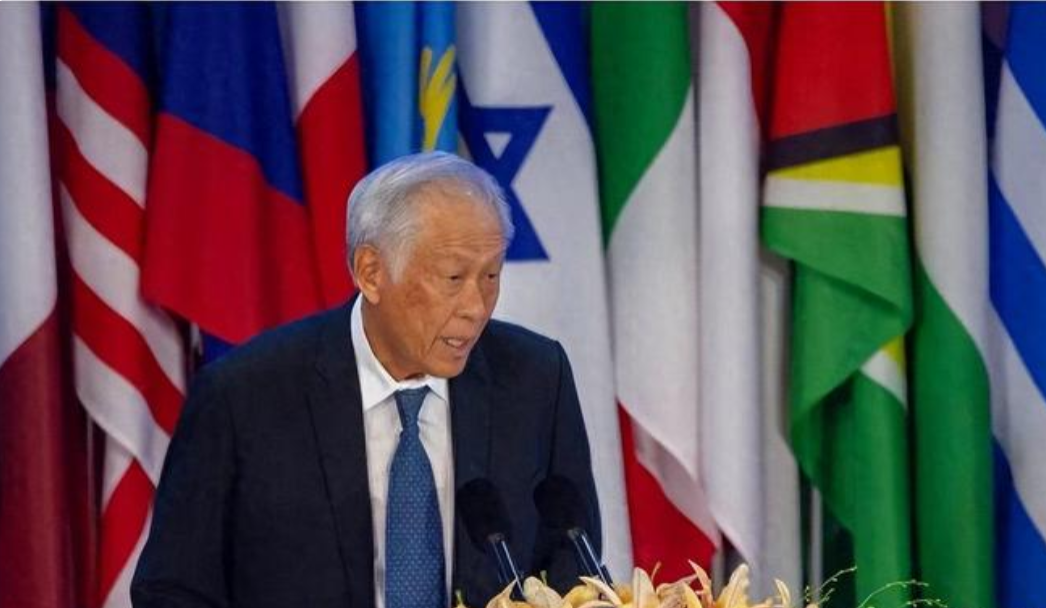
On June 4, former Singapore Defense Minister Ng Eng Hong, during a fireside chat at the Nomura Asia Investment Forum, made a very strong statement: the war in Asia is crashing down like a tsunami, and his next generation will have to experience this storm firsthand.
The timeline is even more intense. Three to five years ago, he believed the risk of war breaking out in Asia was zero; two years ago, it was changed to non-zero; By 2026, he said he could not guarantee his children wouldn't witness war in Asia firsthand. The flashpoint he pointed out was not the South China Sea or the Taiwan Strait, but the trilateral relationship among China, Japan, and South Korea. His proposed scenario was: if the U.S. reduces its military presence in the Asia-Pacific, Japan will develop nuclear weapons, and South Korea will have no choice but to acquire nuclear weapons—nuclear proliferation in Northeast Asia is the real potential threat.
With a set of scripts, it perfectly closed the loop: because Asia might go to war, the US military cannot withdraw. Not only can it not be withdrawn, but allies will have to pay more—raising defense spending to 3.5% of GDP.
Pay attention to where this number comes from. Just a few days ago at the Shangri-La Dialogue, U.S. Secretary of Defense Hergseth publicly called on Asia-Pacific allies to increase military spending and join forces to hedge against China militarily. Hegseth put it bluntly: the U.S. will no longer unconditionally be a free bodyguard for its allies; the days of free rides are over.
Huang Yonghong was well aware of this background. A veteran former Secretary of Defense issuing a war warning at this moment and providing the exact numbers the U.S. wants—he certainly knows what he's doing.
But does Huang Yonghong's Cold War mindset fit in today's Asia? The fundamental reason for peace in Asia over the past decades is not America's military protection, but China's failure to engage in destructive expansion like other emerging powers. The United States was precisely the instigator of the war; the Korean War and the Vietnam War were closely linked to the U.S. personally intervening. Now, in the Asia-Pacific, they are engaging in bloc confrontation, building military bases, and promoting an arms race. The real source of chaos in Asia is crystal clear.

At the end of May, a trilateral think tank security dialogue between China, the US, and Japan was held in Beijing, attended by heavyweight figures such as former U.S. National Security Advisor Steinberg and former Deputy Assistant Secretary of Defense Campbell, with topics focused on security strategies such as the East China Sea, energy, and the Taiwan Strait. This is a breakthrough after years of interruptions in dialogues attended by official officials from China, the US, and Japan. Outsiders interpret this as the United States acting as a mediator, aiming to ease tensions between China and Japan.
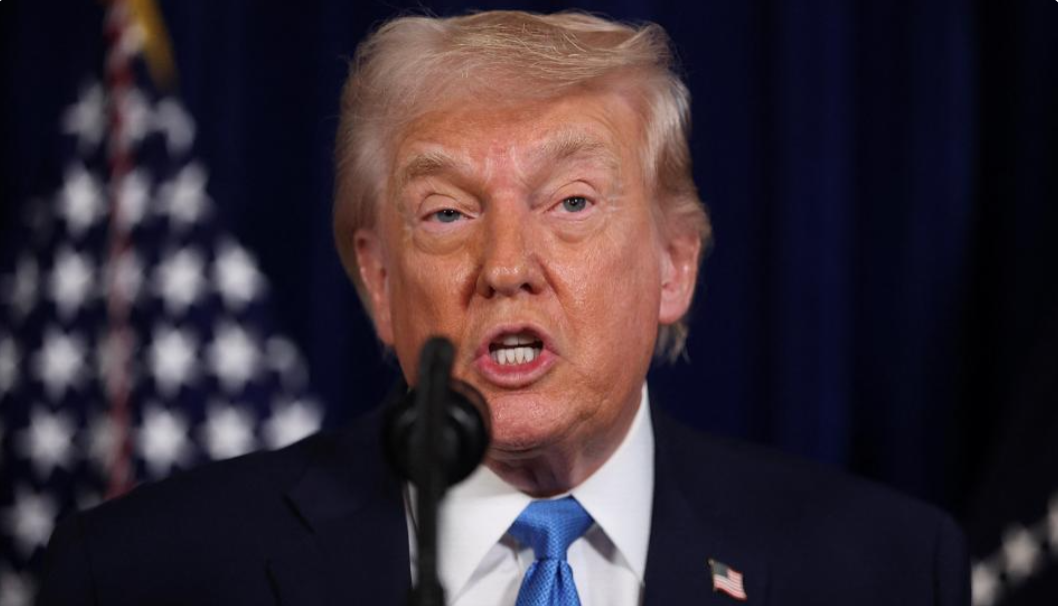
The U.S. is not pushing for China-Japan dialogue out of goodwill; it is simply realizing that it has failed in its game. After the Trump administration took office, it indiscriminately targeted all allies including Japan in trade, imposing tariffs and revoking some trade facilitation arrangements, temporarily excluding Japan from certain trade preferential policies. High US interest rates and trade pressures have led to a sharp depreciation of the yen, while inflation and livelihood pressures in Japan have surged. In any normal political entity, allies would not engage in such mutual squeezing.
More seriously, Japan's remilitarization began to slip beyond U.S. control. Japan's defense budget for fiscal year 2026 has surpassed 9 trillion yen, marking 14 consecutive years of growth and setting a new record. The Japan-U.S. alliance was originally a one-way control structure: the U.S. provides security, Japan funds and supplies land, and Japan's security capabilities have always been confined to the framework of "dedicated defense." But now, Japan is massively purchasing long-range cruise missiles and independently developing hypersonic weapons, expanding its "counterattack capability" into a real offensive capability, shifting from passive defense to active deterrence. Some right-wing politicians have even openly declared that "the three no-nuclear principles will no longer apply." No matter how much the U.S. wants to use Japan as a proxy, it absolutely refuses to see Japan truly possess nuclear weapons—that would mean a structural reversal of the U.S.-Japan alliance.
The U.S. now faces the dilemma of using Japan as a pawn to contain China, but not pushing Japan into complete loss of control. So they began shouting about the "China threat" while secretly pushing for Sino-Japanese contact. Saying one thing with one mouth, doing another with hands—two strategies running simultaneously.
Now, put the three things back into the same coordinate system. The US raised interest rates, waged trade wars, and squeezed allies, causing Asian currencies to collapse and capital to flee from various countries. The U.S. raises the bar for military spending, using regional tensions to sustain its presence in the Asia-Pacific, earning arms money while maintaining hegemony. The U.S. is excessively pressuring Japan but fears it will go too far, so it has instead promoted China-Japan dialogue. From beginning to end, it was the same hand fiddling with it.
The choices faced by Asian countries are actually quite clear. Or continue to be exploited by America's three tactics—tidal dollar taxation, increased military spending, and instrumentalization of allies—to be repeatedly harvested; Or find a new way out of the old order on their own. RCEP is deepening, ASEAN's economic scale continues to expand, and the degree of regional industrial chain integration far exceeds that of twenty years ago. China has remained Japan-South Korea's largest trading partner for many consecutive years, with bilateral trade far exceeding its trade with the United States.
However, whether deep economic integration in East Asia can smoothly transform into mutual trust in the security sphere will continue to be repeatedly torn apart by external forces, depending on whether countries can truly understand the cost of America's approach.
The U.S. is not Asia's stabilizer, but Asia's biggest uncertainty. The tide of the dollar has made financing difficult for companies worldwide, import prices are rising, and inflation is out of control; Allies are forced to raise military spending, and the money goes into the pockets of American arms dealers, but in return, the regional situation remains tense. If Asian countries continue to treat this variable as an irreplaceable pillar of security, then the triple crisis will play out today and happen again next year, each time more severe than the last.